Posts

The pitfalls of economic nationalism in Tanzania
Image
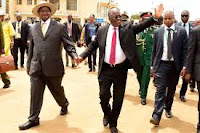
Presidents YKM of Uganda and Tanzania's JPM:  Friendship at whose cost? Tanzania is now firmly on an Economic Nationalism path in a bid to create a “fairer economy” for the country and its citizens.  Such policy involves a greater state role in the management of the economy, diminishing the role of markets. However, there are pitfalls that put the success of the path to doubt: Production of marketable goods requires money, equipment, and technical know-how including management. Without these, resource or economic nationalism is a pipe dream for, investors choose to stay away.  The Latin American pioneers in that path do not appear to have gained from the windfall of oil price increases in the early 2000s.  In Venezuela, one of the early advocates of natural resource nationalism, more than 70 percent of the population is reeling in poverty today, and the economy has virtually collapsed. Economic nationalism involves; emasculating dissent, including poli...

Which is the largest Economy in East Africa?

Image
The high flyers: Kenya and Ethiopia Which is the largest economy in East Africa? Interesting question. There is two running neck on neck-Ethiopia and Kenya.  The GDP of both countries has crossed the US$86 billion mark and, at the current rates of growth, will cross the $90 billion Mark in the next 12 to 18 months… well, 10 to 16 months.  When we wrote about the epic rivalry between the two economies, we did not see the reason for the see-saw on the top perch. Now we can confidently report it. It is just a small gap in the GDP accounting periods! Is Ethiopia’s the largest economy in East Africa or is it Kenya’s? A casual glance at GDP data could place Ethiopia at the top or even place Kenya at the top.  You won’t be wrong depending on the time period. But look again: Which is the economic powerhouse in East Africa? There is a six-month hiatus in the GDP accounting periods of the two countries. Kenya accounts for its GDP during a Calendar year (January-Decembe...

Who gains from debt to invest: Lender, borrower or both?

Image
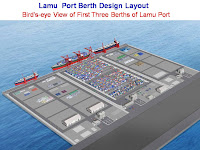
Proposed Lamu Port: Megaprojects  shift the growth curve If loans disbursed in full and on time, Borrower gains, If  disbursed in tranches and delayed, lender gains. Some lenders opt for  the latter  Does borrowing for capital formation benefit the borrower or the lender? Is there a loser or is it a win-win situation?  Recent economic data gleaned from various sources suggest that it is a win-win provided the debt is disbursed “on time and in full- and invested in capital formation.”  Africa Development Bank, in its Africa Economic Outlook, 2019 provide data that supports this thesis without saying so.  However, the Outlook 2018 called on Africa to mobilize external resources to fund infrastructure development. To do this, the document called on the continent’s Planners to craft bankable projects for funding through PPPs. The Outlook 2019 says that Ethiopia’s Debt to GDP ratio stood at 61.8 percent at the end of June 2018, the end of th...

Brace For Ethiopian dominance?

Image
GERD: The largest hydro Dam in Africa After decades of bad news, Ethiopia, like the proverbial Phoenix is emerging from its ashes, shedding off its poorest of the poor image. The nation, the former by-word for poor governance, misery, and death, has stirred to life and is now trotting to become the leader in Africa. Her GDP growth rate is the fastest in Africa at 8.5 percent. And it is not in GDP that she is the leader. Ethiopia also leads in aviation and hydroelectric generation. She is the first country in sub-Saharan Africa to complete a standard gauge railway, albeit of lower robustness compared to the Northern Corridor Line in neighbouring Kenya; she also is the first in Light Railway. It is also the first country to end 20 years of hostility with its neighbor in one week. Africa had better brace for Ethiopian dominance! The country is beginning to reap the benefits of its “daring” investment programme. We say “daring” because of the colossal amounts involved and the hu...

Stampede to invest in infrastructure in East Africa

Image
Menengai Geothermal Station, Kenya  Investment in infrastructure projects, particularly power and Energy, in East Africa has turned into a stampede. In 2017, five mega-projects worth $10.7 billion were under construction. Ethiopia led the pack with two hydro projects worth $6.9 billion. It was followed by Uganda whose Karuma hydro dam cost $1.6 billion. Tanzania came third with Mtwara Gas project worth US$1.3 billion. Kenya did not have a mega project.  However, Kenya boasted of a 23 infrastructure projects including energy which are worth less than a billion dollars. Ethiopia and Kenya lead in the number of projects under construction. According to the business consultancy Firm, Delloite, in 2017 the two commanded 43 projects with, Kenya leading with 23 projects and Ethiopia with 20 projects. However, Ethiopia led in terms of the dollar value of the projects. This is not surprising for Ethiopia is investing heavily in Railways and Hydro dam projects that are natura...

Kenya and Ethiopia in epic Economic Rivalry

Image
  Ethiopian Railways Electric  SGR train   The Rivalry between Ethiopia and Kenya in international athletics is also being played in regional economics. The countries are now the dominant economic powerhouses in East Africa. And they keep see-sawing regarding the leader. One moment Ethiopia leads the next year, Kenya leads. As in international athletics, the rivalry makes for economic good news in the region. The two countries with a combined population of more than 140 million control 64 percent of the regions GDP estimated at $251.54 billion in 2017 and they are the main drivers of robust GDP growth in the region.  Kenya’s GDP $81.2 billion at the end of 2017 following the revision of economic data for 2017 from US$75 billion to US$ 81.2 billion. Ethiopia’s GDP was $80.6 billion in 2017. This means that as at the end of 2017, Kenya’s economy was larger than Ethiopia’s by $600 million.  Both economies are one and a half times larger than Tanzania’s G...

Demand for Diesel Power Generation wanes in Kenya

Image
Wind, Solar, Geothermal, and  Hydro  the leading   sources of power Green energy sources of Power generation in Kenya have surpassed 2.4GW thus paving the way for decommissioning of Diesel powered generation. Demand for Thermal power is declining as other cheaper sources come on stream.  This process will begin in two years’ time, the President has announced. Kenya is also, self-sufficient in electric power generation in the short run. The current capacity has risen to 2351 MW against a peak demand of 1802 MW, says KPLC, the electricity distributor.  Ninety percent (or 2.4 GW) of this capacity is supplied by green sources-hydro, geothermal, wind, and Solar sources.  The spare capacity, which is a requirement in power generation, stood at 23 percent by June 31, 2018, says the power Distributor, KPLC’s in its annual report 2017/18. Since then, an additional 364 MW have been added to the grid which puts the total capacity at 2715 MW. ...