Lamu: Morphing into an economic hub for East Africa
 |
| LAPSSET Corridor |
Eight years ago, this publication predicted that Lamu will become a major city in Kenya. Something of a Qatar of East Africa. This prediction was grounded on several factors to wit: the 32-berth Lamu Port; the then proposed 120,000 BPD refinery; LAPSSET; the proposed power generation plants to generate 1150 MW; a Crude Oil Pipeline from Kenya’s oil fields in Marsabit, and possibly South Sudan. Also See https://eaers.blogspot.com/2018/06/lamu-gunning-to-be-energy-hub-in-kenya.html
We said that these projects will change Lamu’s ecosystem. But we never anticipated the Magnitude of the change that came eight years later.
 We did not imagine, in our wildest dreams, of a US$17 billion Petrochemical Plant processing 700,000 bpd. Now that Lamu has been chosen to host the plant, the second largest such plant in Africa, we update our prediction because the changed ecosystem extends beyond Lamu County. Then new complex could turn to be the missing link in East Africa’s industrialization drive.
The East African Refinery, a US$17 billion behemoth paves the way for deeper industrialization in Kenya. The complex will meet East Africa's daily demand for refined fuels which stands at 0.412 million bpd and generate feed stock for a number of industries including Fertilizer, Plastics, Textile, and pharmaceutical industries. In addition, it will export 0.288 Million bpd of refined fuels.
That opens up opportunities for Oil trading, Banking, Insurance, Warehousing, Clearing and Forwarding, ICT, engineering, fabrication, contractors and services sectors at a larger scale than we anticipated eight years ago. That the investment comes with clean power generation capacity of 1GW, half of it available to other users through the national grid, is another feather in the cap.
The natural Port itself, which a new and sufficiently deep to hold any Post panamax and post Suez vessels will become a maritime hub. So far it has proven its mettle by hosting two vessels measuring more that 360 metres in length.
That single investment is a record breaker in the real sense of the word. Kenyans, in fact, East Africans are not used to record-breaking investments, running into tens of billions of dollars. Naysayers had consigned Kenya to the dustbin as an FDI destination.
Aliko Dangote, Africa’s richest man, has just shot the first volley: a US$17 billion by an African investor. As one analyst put it: “This is an investment in Africa by an African, No conditions, no debt. No IMF lording it over us and no Westerner sinking a dime.”
That is significant- Africa is coming of age and is investing in itself. That alone is a signal of African renaissance. African can now finance her development agenda- in a big way. That is the path to economic freedom- not slogans, real investment.
The Petrochemical plant is the nectar that will attract bees into Lamu County and its neighbouring Counties such as Tana River, Kitui, and Garissa and beyond. We are talking investment here.
The Port area is 20 kilometres long with depths ranging between 17.5 Metres along the main channel, -rising up to 60 Metres at the bay. It can therefore host post-Panamax or Post-Suezmax vessels that are too big for the Mombasa Port. It has 32 berths, three of which are operational. That leaves 29 berths that were meant to be developed on PPP basis.
Initially there was little interest in the Port’s infrastructure development as the Port is a greenfield, with very little traction in the maritime industry. That was in the past. Now we expect renewed interest- and investment. The existing three- berths cost the Kenya government some 500 million dollars.
Already several post-panamax vessels have landed with one off loading More than 5000 containers. That’s historic. Even Mombasa Port, the hub of Maritime transport in East Africa has not handled such a large consignment.
This makes investing in its infrastructure a viable business venture . In the near future, we expect renewed interest. That means more business and larger employment in the Port area. Should the Private sector hesitate, the government has reason to commit funds to develop the infrastructure.
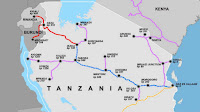
Another venture that has morphed from a dream to reality is the US$25 billion, Lamu Port South Sudan Ethiopia, LAPSSET, corridor. This is a multi-model transport corridor including; Oil Pipelines, High Speed Railway, and roads, all anchored on the Lamu Port. We expect them to attract renewed interest as the Dangote plant and other industries will need them to transport their produce to the market in East Africa. Investors, who were reluctant to hitch tent will now dust their plans targeting the dime to be made here.
The East African Refinery is the largest single investment in the country’s –and East Africa’s history. It is nearly 10 percent of the country’s GDP. Its impact will reverberate beyond the County and Kenya as a country in the short run, medium term and long run.
Infrastructure aside, the Plant has significant economic impact in the 300 million People East African Common Market. To start with it shall produce enough fuel to feed the entire region’s daily consumption. The region consumes some 412,000 bpd, leaving an estimate 288.000 bpd for export. This will wean the region off dependence on imported fuel, ensure fuel security and stabilize prices in the region. In Nigeria, Dangote Refinery has fixed prices at US$0.775 a litre while retail prices hover around $0.973 a litre.
Dangote Refinery in Lagos, Nigeria, the largest such refinery in Africa, has stabilized fuel prices in Nigeria and improved its supply.
The Lamu plant will stabilize fuel security in East Africa. Stable fuel prices will reduce inflationary pressure and thus stabilize domestic prices in the region. All other industries that will set up shop in Lamu or its neighboring Counties to use the refinery’s by products will also improve supply and stabilize domestic prices in the region.
Lamu, a county that was known for its historical and cultural importance, which was once seen as no more than a “Resort City,” will morph into an industrial and transport hub in about a decade. And like the Emirates in the Middle East, it will have more “foreign residents” than the indigenous people. It will soon be a cosmopolitan city.


Comments
Post a Comment