Posts

Geothermal energy: Turkey is Kenya's next target

Image
A geothermal Steam Gathering System  The stage is now set for Kenya’s 105MW geothermal electricity generation to take off. Construction of the US$108 million  Menengai geothermal station is now complete, announced Africa Development Bank. The project involved well-drilling and construction of the Steam Gathering System (SGS). The bank, the co-financier of the development phase, says the project met all targets. These include drilling 50 Wells and construction of the steam gathering system.  It drilled 49 Wells producing enough steam to generate 170 MW against the initial target of 150MW. The report says that completion of the phase1 was a drawback to the financial closure of the IPP contract due to conditions attached to the deal.   Among the conditions were; approved PPA contracts and, Proof of Steam Supply Agreement, PISSA. These conditions could not be met before the completion of phase 1 since Menengai geothermal was a greenfield project.   However, the ...

Kenya is world's fifth geothermal powerhouse

Image
A Geothermal Power plant According to data deciphered from Kengen and Orpower4, Kenya’s leading geothermal power generators, the country has joined the top five largest producers of geothermal power in the world.   The data shows that Kenya’s total geothermal capacity is well past 1000MW, it now stands at 1125 MW.   It is already in the 1GW club!   This upends the the current global ranking which places Kenya at the seventh slot by ThinkGeoEnergy. The firm ranks Kenya number seven with an installed capacity of 861 MW. However, our analysis shows that, the data on which this ranking is based, is outdated.   But the confusion, our survey reveals, is of the generators’ making for they do not regularly update their data. Kengen’s website www.Kengen.co.ke for instance has two sets of data; one says that its installed capacity is 706 MW, and another that lists seven power stations with a total 975 MW capacity. In addition, the data ignores the 150 MW produced by Orp...

Now is time to Retool "brutal" capitalism

Image
   Risks of unbridled capitalism : Air pollution  The COVID -19 pandemic has exposed unbridled capitalism as fragile and myopic. It creates income disparities, low pay for essential workers, discrimination,  false hypotheses, state capture, and fragile economies.  Capitalism has been harshly indicted but no one wants it dead.  Instead. experts call for retooling of brutal capitalism.   “The American form of Capitalism is brutal. With very little public investment and very little Social safety nets” says professor Robert Reich of the University Of California Berkeley. In an interview with CNBC TV. https://www.youtube.com/watch?v=FQswOcLFYWg .   “It transfers wealth from the poor sections of the population to the rich,” said Bernie Sanders, a US Senator. "It is designed to favour the White Anglo-Saxon Protestant race which considers itself superior," argues professor Bill Spriggs of Howard University. https://www.marketplace.org/2020/06/18/for-too-l...

“The debt pandemic”: Time to update our thinking.

Image
 Instability: Among the results of fragile economies According to the Economist’s broadcast channel, by the end of August 2020, the sovereign debt had hit $258 trillion worldwide. The US borrowed some 3 trillion dollars in the second quarter of this year. Other countries are also on a borrowing binge owing to the public health pandemic CoVID-19, much of it in the second quarter. According to the IMF, emerging markets have so far borrowed some US$125 billion in commercial loans over the same quarter. This has given rise to fears of global debt distress and defaults. Measures enforced to contain the public health crisis caused by COVID19 led to an economic crisis that gave birth to a “debt Pandemic.”       However, there appears to be new thinking about public debt that dispenses with frugality. In fact, some economists disparage frugality as a “Zombie idea” -a bad idea that lacks evidential support but still keeps influencing policy decisions. The former IMF Ch...

Public health: How politicians always get it wrong!

Image
 The COVID-19 Virus Thanks to COVID-19, public health has emerged as the top national security risk everywhere.  And it has triggered off a string of socioeconomic pandemics that no other shock before triggered:  There is rising; national debt; the collapse of economic activity; unemployment and surging incidence of poverty. The demand for governments to spend more to support the economy has never been so high!   In the past politicians and technocrats have treated Public health as a low priority risk. Ranking low after defense and public service salaries in budgetary allocations. They were always wrong! Even when the pandemic came calling, the response was lethargic at first. Torn between averting an economic and a public health disaster, they stuttered. They were unprepared for a sudden shock and bungled the COVID-19 pandemic as they did a hundred years earlier during the Spanish Flu pandemic of 1918-19. The scourge was sudden, extreme, and swift and there...

How Zombie Ideas create fragile economies

Image
Zombie ideas are as destructive as terrorists  I have always found some economic hypotheses a paradox. They appear to belie the conclusions of the economic theories and their benefits, if any, appear transitory. Among the hypotheses are; higher minimum wages are a sure killer of jobs; tax cuts for the rich pay for themselves;  the private sector is more efficient than the public sector; market efficiency is the best  determinant of the true value of a factor of production.   There is no scientific evidence to back these beautiful sounding hypotheses. For instance, the hypothesis that higher minimum wages are a sure job killer is not persuasive when juxtaposed with factors that drive economic growth. Wealth creation is a function of demand: The higher the demand, the higher the production of goods and services, the higher profits and therefore, wealth.   The theory of demand teaches us that demand is effective when backed by money to buy...

AfCFTA: The Post Covid-19 stimulus in Africa

Image
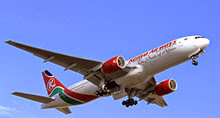
Kenya Airways: Retooling Africa must fast track execution of the World’s largest free trade area agre ement,  AfCTA , experts say. AfCTA, which is expected to come into force in January  2021, is according to the Brookings Institution,  the stimulus needed to jump-start post- COV ID-19 economic recovery in the continent,   given its fiscal constraints. Among the areas that need urgent attention is, pharmaceutical production, where Africa is especially vulnerable, adds the Africa Trade Policy Centre . It should also prioritize intra-Africa trade . The pandemic shocked the entire world because it was “sudden, extreme, and spread rapidly,” says    Daniel Susskind of Oxford University.   Policy measures to contain it disrupt ed the entire economic spectrum of production, supply and demand resulting in the “self-inflicted economic devastation.”  Such devastation also taught some critical lessons and exposed glaring risks . Among these are the vuln...