Posts

Let Crude oil remain underground-unexploited

Image
Soldiers guarding a crude oil storage Tank in South Sudan   In November 2020, we ran a story on the risk facing the fossil fuels industry, we asked; whither the industry and the economies that depend on it to fund national development?   https://eaers.blogspot.com/2020/11/whither-fossil-fuels-and-dependent.html Now, a recent report on the Ugandan oil industry provides the answer- and it is gloomy. The Ugandan oil industry comprises the upstream wells, the Midstream oil evacuation pipeline, EACOP, and the downstream oil refinery. The crude oil prices, on the other hand, are declining with no prospect of turning north significantly in the future. Developing this industry could thus be spending good money in pursuit of bad. The world is shifting away from fossil fuels due to climate concerns.   The report, “ understanding the impact for a low carbon transition on Uganda’s planned oil industry” by Climate Policy Initiative, CPI, suggests that the industry is stillborn. ...

How zombie ideas sabotaged the SGR project in East Africa

Image
Presidents Museveni and Magufuli This bromance almost derailed a  major development project  According to a report in Uganda’s Daily Monitor , the government of Uganda will construct 2700 KM of Standard Gauge Railway regardless of whether Kenya extends its section to the border or not. The work, says the report, quoting the Coordinator of the Project, Eng. Perez Wamburu will begin in the financial year 2021/2022. This is good news for the project that was almost derailed by populist, Zombie ideas. Wamburu expressed confidence that the Chinese Exim Bank will approve its loan application, perhaps early next year. Uganda’s decision adds the pressure on Kenya to extend the line to Malaba, on the Kenya-Uganda border. The China Exim Bank withheld funding for the whole project after a tiff between Kenya and Uganda forced Kenya to redesign the line to terminate in the Kisumu City of Kenya, on the shores of Lake Victoria.   Trouble for the line began in 2016 due to meddling ...

Addis-Djibouti SGR Line: Cheap is expensive!

Image
 ETHIO- DJIBOUTI RAILWAY SUFFERS FROM THEFT AND VANDALISM, LEADING TO HEAVY REVENUE LOSS. Workers building embankments on the Kenyan SGR This headline, in an Ethiopian publication, Addis Standard of December7th, 2020, dismayed me. It reported about a meeting held by the Management of Ethiopia Railways Corporation and local residents of the Amhara Region. The purpose was to educate the local people on the benefits of the Railway line and to motivate them to protect it.   The Corporation, said the Managers, had lost 114 million Ethiopian Birr (US$2.961 million), in the quarter ending September 31, 2020, due to vandalism and theft of Railway infrastructure. This crime, said the Managers had forced the train, an electric train, to slow its speed from 80Kph to 50 Kph thus slowing freight movement between Addis-Ababa and Djibouti port, by six hours. The 705 MK journey would normally take 12 hours but now extends to 18 hours.   The Addis-Djibouti Railway line is the first ...

East Africa’s High-Speed Railways: Cleaning the crap

Image
The Electric train: underperforming  The race to modernize East Africa’s railways has triggered a hail of confusing false reports. So diffuse is the crap that, one could be forgiven for thinking our governments are run by buffoons who just sunk some US$ 20 billion down the drain.  The crap ranges from the absurd to the foolish. Here we intend to rubbish the crap. The root of this misinformation is twofold: the anti-Chinese sentiment in the West and propaganda by Tanzanian President Magufuli. Magufuli once lied that the Tanzanian Railway line will cost a million dollars a Kilometre. Most commentators on social media do not appear to have learned anything new since then.  Of course, government opacity on the projects also fed the misinformation. They should have answered such questions as; when was the decision to invest in high-speed railway lines made? Why? How and why were the contractors chosen? How were the costs determined, and by whom? How were the financiers chosen ...

Whither Fossil Fuels and dependent economies?

Image
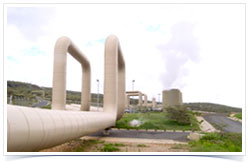
Geothermal Plant: A reliable, cheap, and clean energy  source Technological advances in renewable sources of energy, coupled with policy-shift in favor of cheap energy, are putting the fossil fuels sector in jeopardy.  It is not just the industry whose future is bleak, but also economies that depend on Fossils fuels. The threat is compounded by the rapidly growing investment in green energy sources. The entry of electric or hybrid vehicles in the transport sector makes a bad situation worse. A number of reports reviewed by this publication show that Wind, Solar, and geothermal in that order, will play a significant role in electricity generation in the next 30 years. Experts say that fossil fuels, particularly Coal, will cease being an energy generation source in the next 30 years. In fact, projections show that by 2050, renewables- Wind, geothermal, and Solar- will have increased significantly to replace fossils as sources of energy. This is because, renewable energy source...

Geothermal energy: Turkey is Kenya's next target

Image
A geothermal Steam Gathering System  The stage is now set for Kenya’s 105MW geothermal electricity generation to take off. Construction of the US$108 million  Menengai geothermal station is now complete, announced Africa Development Bank. The project involved well-drilling and construction of the Steam Gathering System (SGS). The bank, the co-financier of the development phase, says the project met all targets. These include drilling 50 Wells and construction of the steam gathering system.  It drilled 49 Wells producing enough steam to generate 170 MW against the initial target of 150MW. The report says that completion of the phase1 was a drawback to the financial closure of the IPP contract due to conditions attached to the deal.   Among the conditions were; approved PPA contracts and, Proof of Steam Supply Agreement, PISSA. These conditions could not be met before the completion of phase 1 since Menengai geothermal was a greenfield project.   However, the ...

Kenya is world's fifth geothermal powerhouse

Image
A Geothermal Power plant According to data deciphered from Kengen and Orpower4, Kenya’s leading geothermal power generators, the country has joined the top five largest producers of geothermal power in the world.   The data shows that Kenya’s total geothermal capacity is well past 1000MW, it now stands at 1125 MW.   It is already in the 1GW club!   This upends the the current global ranking which places Kenya at the seventh slot by ThinkGeoEnergy. The firm ranks Kenya number seven with an installed capacity of 861 MW. However, our analysis shows that, the data on which this ranking is based, is outdated.   But the confusion, our survey reveals, is of the generators’ making for they do not regularly update their data. Kengen’s website www.Kengen.co.ke for instance has two sets of data; one says that its installed capacity is 706 MW, and another that lists seven power stations with a total 975 MW capacity. In addition, the data ignores the 150 MW produced by Orp...